Overview
Why your bio matters
If you want to
find a dungeons and dragons group  https://groupfinder.eu/list
, you should keep in mind, that the player to DM ratio is heavily skewed against you. Most DMs receive up to 10 applications per player seat. Having a great player profile will help you stand out and will create a good first impression.
Finding a dnd group https://groupfinder.eu/library/how-to-find-a-dd-group-online-the-ultimate-guide-for-2026 has a lot in common with online dating. Leaving a good first impression, seeming reliable, trustworthy and willing to commit - these are all important either on a dating profile or when creating a player profile. If your thinking is “If they want to know more about me, they will ask.” It is very likely that they won’t. Remember that you are fighting an uphill battle. Groups aren’t really facing a shortage of players and you need to use any tool and skill you have to display yourself as someone they want to have in their group.
Ofcourse it will be a balancing act - introducing yourself in as much detail as possible, while not ending up with more paragraphs than a book.
The anatomy of a player bio
Preferences, playstyle, experience, logistics, reservations and much more - all of these are things that help a Dungeon Master find the right person to even start a discussion with.
If your profile introduces you on a superficial level:
“Hello, I am Holger and I would love to find a group to play with.”
Then you aren’t really saying much (other than your name, which is a good start).
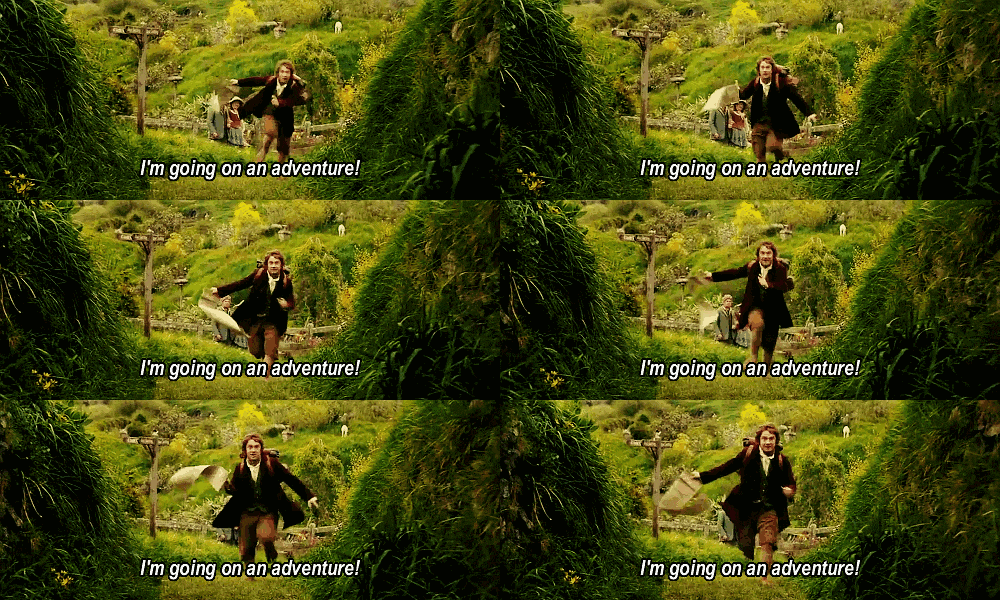
This could be you.
Playstyle
Are you someone who enjoys roleplay above anything else? Or do your eyes light up whenever the DM tells you all to “Roll Initiative”? Perhaps you find enjoyment in both deep character interactions, social encounters but when need be, have a good understanding of how combat works and enjoy casting fireball too close to your fighter (It happens…).
If you know what you’d prefer in a game, be sure to explain which core pillars of the game you enjoy - a game that is all about dungeon crawling and heavy combat situations will not be something a roleplay-focused player will find as enjoyable as one with political intrigue, social manipulation or characters with a deep and devious backstory.
You can pick and add various tags to go with your post. Groups filtering players by “Roleplay focused” will find you, if your profile has that tag added to it. Adding tags in addition to describing your preferences in the bio is a powerful tool.
Experience level
Have you played Dungeons & Dragons before? If not - don’t feel discouraged. There are new players discovering DnD every day and a newcomer is not a rare sight. Whether you've played the D&D 2014 rules version or are a newcomer starting fresh with the 2024 revised edition, tell the reader which version you are interested in playing. It can be both, if you are not overly picky.
Many Dungeon Masters, either new themselves or veterans of the hobby, happily welcome new players to their tables. If they are just starting out with DnD and bravely decided to take up the role of the DM immediately (
These players are heroes), they are very likely to enjoy other players with less experience. This is not to say that veterans are not suitable for their games, if the ones with experience are capable and willing to explain, guide and correct (when needed/asked). Nobody wants a “rules lawyer” player who insists on
“Um Actually…” whenever the DM calls for a Perception roll, although Investigation might’ve been more appropriate.
There are also veteran DMs who enjoy hosting newcomers at their games. Making sure that they understand the basics of the game, the core elements and grow them into capable players who will understand the game and how to be a great player.
Having previous experience is not a requirement. But being honest about it is a must. You are unlikely to not get “caught” if you attempt to overplay your experience. And that will just leave a bad impression of you.
Logistics and location
Whether you are looking for an online game, or seeking for an in-person at-a-table group, make sure to be specific.
For online games, mark down your timezone. This will help you find a game, that won’t start after midnight, or early in the morning (Unless this fits well with your schedule). Joining a group where for other players it is 6PM, but you just woke up and are still working through your bowl of cereal, might not be the best fit.
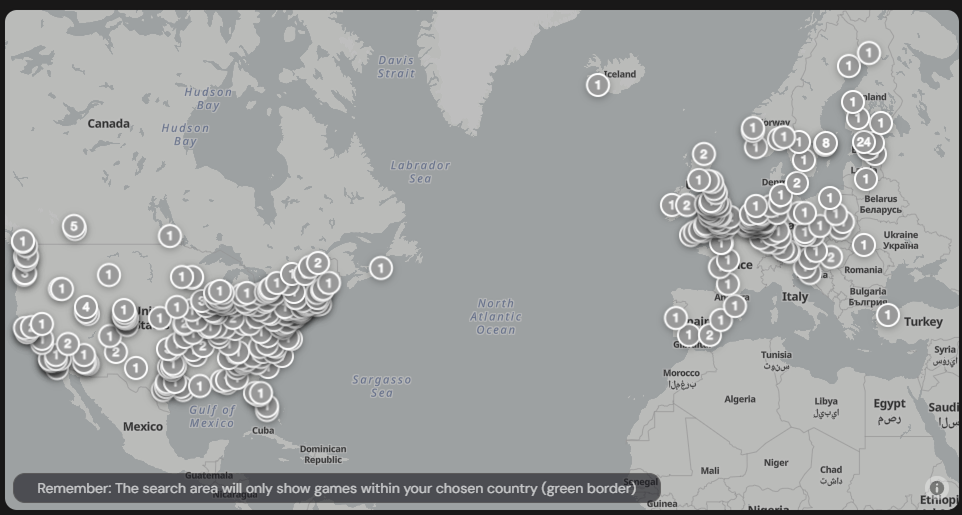
There are players from all across the world (also in regions that did not fit on this map. This is not the entire world, even though some bands arranging their"World Tour" see it that way)
If you are trying to join an in-person game, mark your location. This isn’t to say, that give out your home address - don’t do that. There is no reason for that and putting specific personal information out there is a bad idea in general. Pick the closest town or city to you. On Groupfinder the search isn’t restricted to specific locations, but on a radius. If a DM, looking for players is searching around their area and your town falls into their
search radius - they will find you.
If you have a specific schedule or time prerefences - mark those down. If you can only play from 6PM to 11PM on Wednesdays - make sure that this is clear to understand and see. You can even double down on timezones and repeat what timezone your 6PM is in.
A fun fact
You are not just timezones, experiences and preferences. You are a human being with a personality and thoughts.
Perhaps you have a
character concept https://groupfinder.eu/library/covering-the-basics-making-a-character that you would love to try out. A ranger that is afraid of trees, a wizard that is illiterate or a rogue that hates doing crime. Write a short introduction of that character - this will also give the DM an understanding on how you would approach the game.
If you are not someone, who creates characters to store in your drawer, then this is perfectly acceptable. Many players create a character to fit the world/game they are going to join and craft it based on the lore and history of it.
In addition to a pre-created character, you can list books, shows, movies that you enjoy (that could be seen as your theme or playstyle preferences). This will describe your type of fantasy to anyone reading. Love Discworld? Write it down. Not overly excited about lovecraftian horrors - understandable.
Weak versus good bio: a comparison
While these should be taken with a grain of salt, here are two approaches - one illustrating a superficial approach and one that shows that you put in some effort. That effort will be seen as a “green flag”. You show yourself as someone who is actually willing to put in the work when it comes to a game or crafting a great character that enhances the game.
Weak bio
“I want to play a rogue or a ranger. I’m free on the weekends.”
Good bio
“Hello. I am a 3-year veteran looking for a bi-weekly group on either Thursdays or Fridays (available after 6PM (GMT)). If life doesn’t unexpectedly come in the way, I am reliable and can commit to consistently showing up to on the game night.
I enjoy character-driven games and social intrigue. In no way against combat but I would prefer to find a game with a stronger focus on the roleplay side of things. Very okay with games where our characters can die in reasonable scenarios.
I am a huge fan of The Stormlight Archive series and The Kingkiller Chronicle.”
These are general examples - not something you should be imitating almost word for word. But should be taken as a directing guide when you are creating or updating your profile.

You are all set now.
Ready to be invited?
Stop waiting for a miracle.
Create your player profile now https://groupfinder.eu/userform and let Dungeon Masters find you.
Don’t forget to bump your post every day. You will see the button on your profile. Clicking on the bump button
will move your profile to the top, increasing the odds that your profile stands out and gets noticed.